This year marks the 100th anniversary of Black History Month, a milestone that honors a century of black contributions, resilience and progress in the United States. At The Carlson Law Firm, we recognize that black history lives in families, communities and experiences.
To commemorate this moment, we asked members of our team to reflect on legacy and what a century of black history means to them.
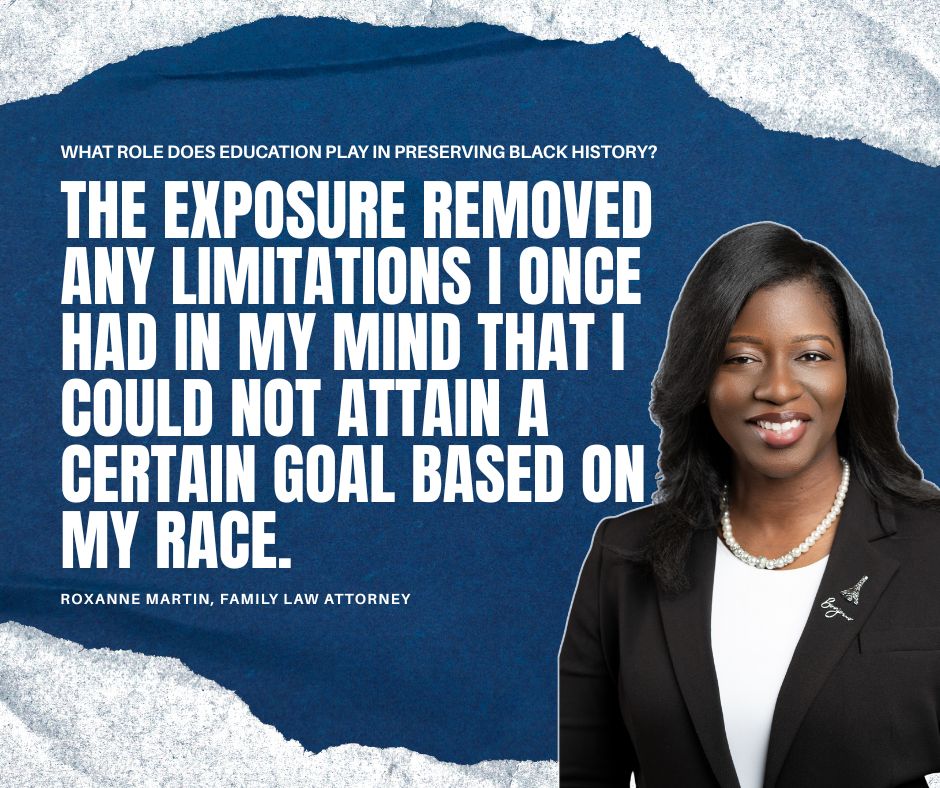
Roxanne Martin
What role does education play in preserving black history?
“For my undergraduate career, I was fortunate enough to attend an HBCU (historically black college/university). I attended Howard University in Washington, D.C. During my time at Howard, I was exposed to phenomenal African American men and women who were pioneers in their field.
The exposure removed any limitations I once had in my mind that I could not attain a certain goal based on my race. Howard cultivated leaders in every field, and I am honored to have attended this school.”
What tradition or legacy has been passed down in your family?
“I was raised by Jamaican parents who immigrated into the United States. My upbringing was a mixture of Jamaican culture and American culture. The foundation of our family was built on our faith in God.
This is what guided our day-to-day lives and kept our family together. We attended church on a weekly basis and were heavily involved in serving at our local church.
Family reunions are a tradition we have had for several decades. We come together from various states and countries every other summer to reconnect, see how the family has grown and love one another. It was always something to look forward to.”
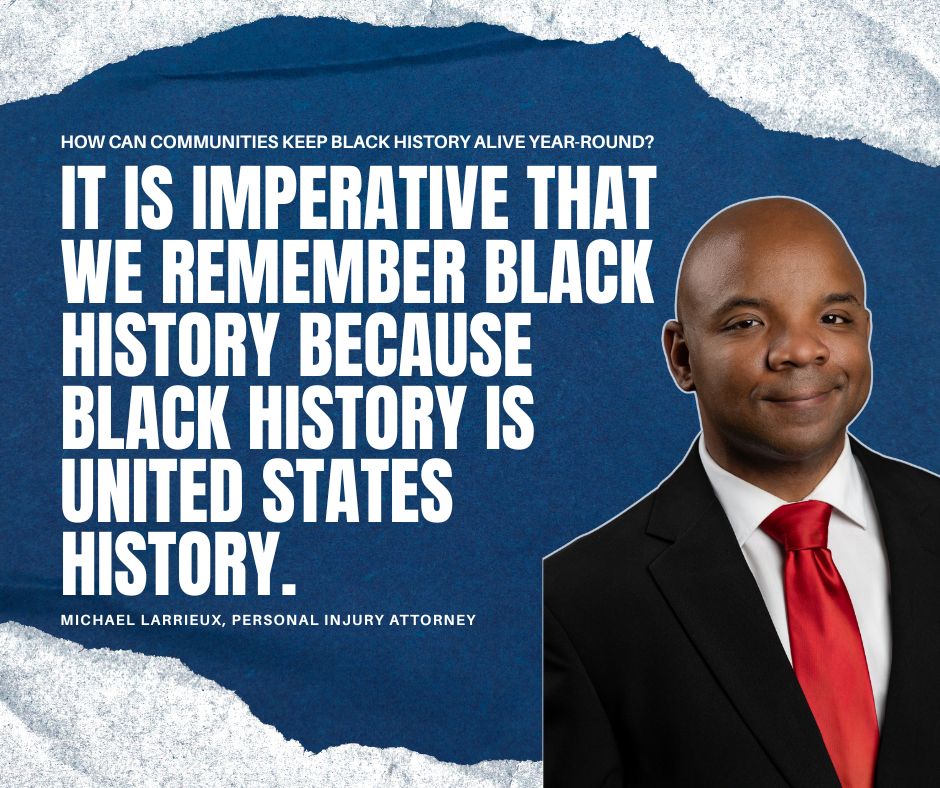
Michael Larrieux
What tradition or legacy has been passed down in your family?
“Primarily, we have a genealogy that my grandfather had detailed prior to him passing. So, it is something we discuss and are aware of. We are very mindful of where we come from in many respects. And we constantly show appreciation for the opportunities we have and the things we have as well.
We constantly gather together for most of the major holidays, and we often share and repeat the things our family members have done or been a part of historically. We also pass on recipes, dances, prayer and we attend church together as we have done as family tradition for many generations.”
What does “A Century of Black Commemorations” mean to you?
“It is nothing short of significant. There was a time [when] this commemoration of black history in America was overlooked and/or dismissed by many. So, having that acknowledgement of past and continuing contributions made by those who are a part of black history really does allow for a sense of gratefulness for all that was sacrificed for many of us.
For instance, Macon Bolling Allen is documented as being the first African American licensed to practice law after passing the Maine Bar Exam in 1844. He later became a Justice in 1848. He further co-founded the first black-run law firm.
Charlotte E. Ray is credited as the first female African American lawyer in the U.S. in 1872. William A. Price and Allen W. Wilder are deemed as the first African American lawyers in Texas, with both beginning their practice in 1873.
Price was a former slave who went on to serve as a Fort Bend County attorney in addition to being a pioneering civil rights advocate. And, of course, I cannot forget to mention Thurgood Marshall, a tremendously talented attorney who argued before the Supreme Court but [who] also went on to become the first African American United States Supreme Court Justice.”
Cheryl Miller
What tradition or legacy has been passed down in your family?
“In my family, the importance of education and prayer has always been passed down. We were taught that education opens doors, but prayer keeps you grounded. No matter what we were facing, learning and faith went hand in hand.
That legacy taught me discipline, resilience and the importance of trusting God while still doing the work. Those values continue to guide how I live and what I pass on.”
What does “A Century of Black Commemorations” mean to you?
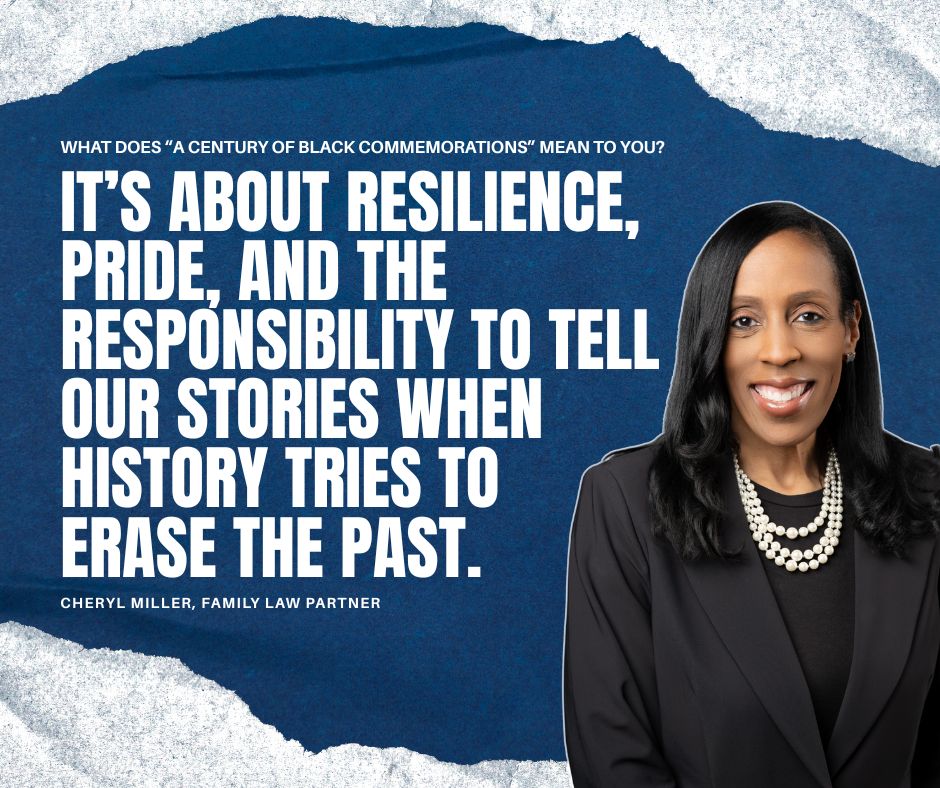
““A century of black commemorations” means honoring the generations of African Americans who made a way out of no way and still insisted on being remembered. To me, it’s about resilience, pride and the responsibility to tell our stories when history tries to erase the past.
It acknowledges the sacrifice, the progress and the strength that carried us forward, and it reminds us that preserving our history isn’t optional, it’s necessary.”
Karisa Robinson
What does “A Century of Black Commemorations” mean to you?
Giving honor where it is due. There have been innumerable contributions and marks made in history by African Americans which rightfully should be acknowledged. It being done for a century is wonderful.
How can we honor black history moving forward?
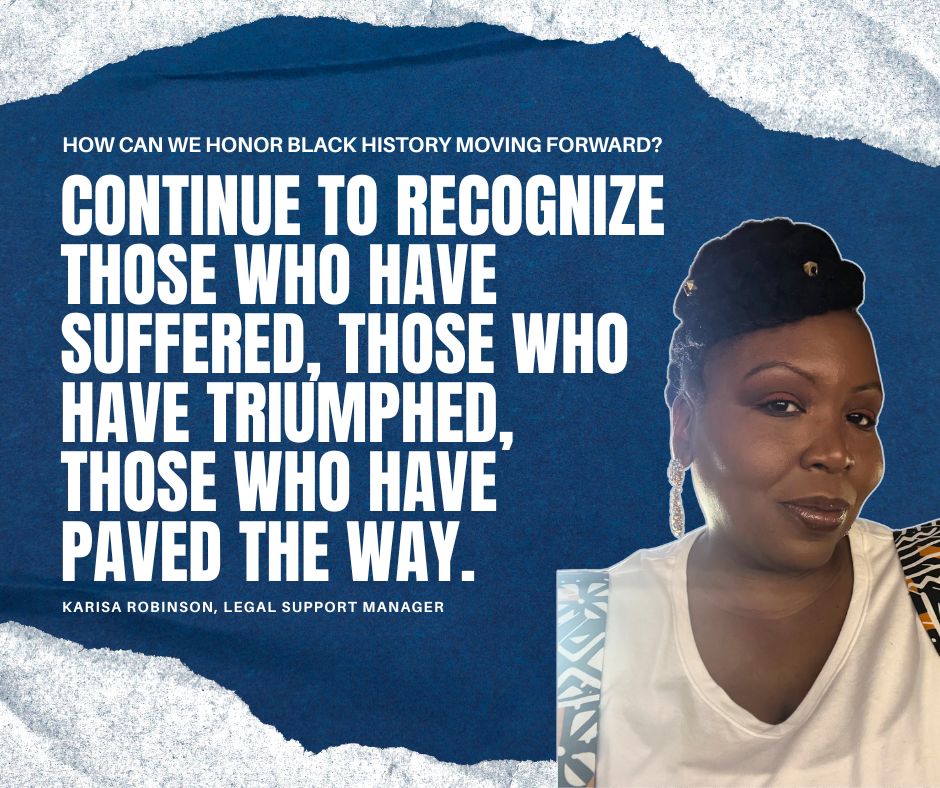
“Continue to recognize those who have suffered, those who have triumphed, those who have paved the way. Never forget.”
What tradition or legacy has been passed down in your family?
“A legacy of faith, character and integrity has been passed down in my family. Our faith keeps us; our individual characters define us. What we do and say should always be a positive representation, even when no one is looking – integrity.”
Kazia Conway
What role does education play in preserving Black History?
“My family stressed the value of education for little black girls. Historically, education is how the powers that be have locked us out of civic participation, economic mobility and self-determination. Keeping us poor, misinformed and dependent on systems that were never built for our liberation is what kept the pecking order of our country.
My family believed that, to break that cycle, you had to be educated. And not just formally, but culturally and historically. You had to understand your own story so no one else could rewrite it, erase it or use your ignorance against you.
For black communities, education has always been more than a pathway to opportunity. It has been a form of resistance. From enslaved people risking their lives to learn to read, to Reconstruction-era schools built by freedmen, to HBCUs and community-run freedom schools, education has functioned as preservation, protection and power.
It is how we safeguard our stories, honor our ancestors and pass down truths that were never meant to survive. Preserving black history through education ensures that our contributions are not minimized, our struggles are not distorted and our brilliance is not forgotten.
When black children learn their history, they don’t just gain knowledge; they gain context, confidence and a sense of lineage. They learn that they come from innovators, leaders, creators and revolutionaries. That awareness shapes how they see themselves, their worth and their future.
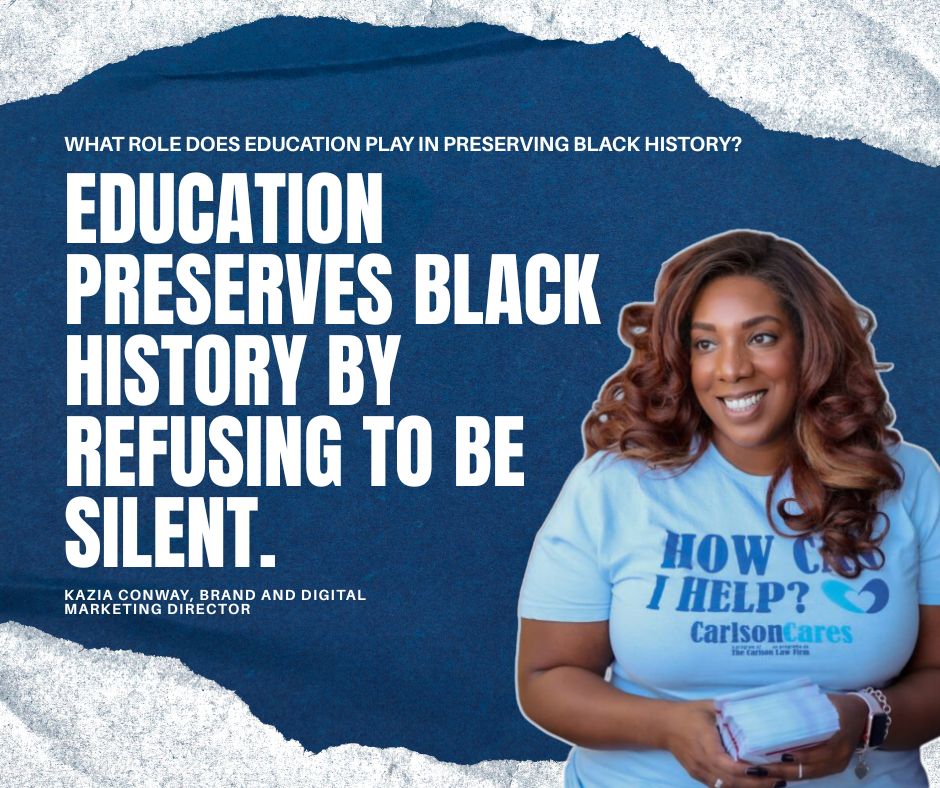
Education preserves black history by refusing to be silent. It keeps our narratives alive, challenges dominant myths and equips new generations with the language, pride and perspective needed to protect what came before them and build what comes next.”
Honoring the Past and Carrying it Forward
A century of black commemorations represents resilience, contributions and enduring memories. By listening to these stories, honoring these legacies and preserving these traditions, we can make sure they are not forgotten.
About The Carlson Law Firm
The Carlson Law Firm is a nationally recognized personal injury law firm dedicated to delivering compassionate, client-focused legal representation. Known for achieving record-breaking results, we’ve recovered billions by handling cases involving auto and trucking accidents, workplace injuries, defective products, dangerous drugs, nursing home neglect, birth injuries, wrongful death, family law, criminal defense and more. Our team is committed to securing justice and meaningful recovery for individuals and families impacted by negligence and injustice.