

Possibly. Many states have expanded or temporarily reopened the statute of limitations for child sexual abuse claims. Whether an older case qualifies depends on state law and the specific timeline involved.

Texas Jury Awards $61M in Products Liability Case Against Honda After Car Wreck |
Home - Mormon Church Sexual Abuse Lawsuit
Survivors of sexual abuse in the Mormon Church claim the religious institution put their safety well-being at risk to protect abusers. By filing a Mormon Church Sex Abuse lawsuit, you can pursue justice.
Our team of attorneys is helping survivors across the nation. Call 800-359-5690 to schedule your free, confidential consultation.
The Mormon Church, formally known as the Church of Jesus Christ of Latter-Day Saints (LDS), has faced a growing number of civil lawsuits involving allegations of child sexual abuse by church leaders, members and volunteers. Victims span multiple states and decades.
Lawsuits against the LDS Church allege local leaders were instructed to manage sexual abuse claims internally rather than report them to law enforcement. Survivors contend that these internal processes prioritized confidentiality and institutional protection instead of child safety and transparency. As a result, abuse was concealed, delayed or never reported at all.
Call 800-359-5690 for a free, confidential case review.
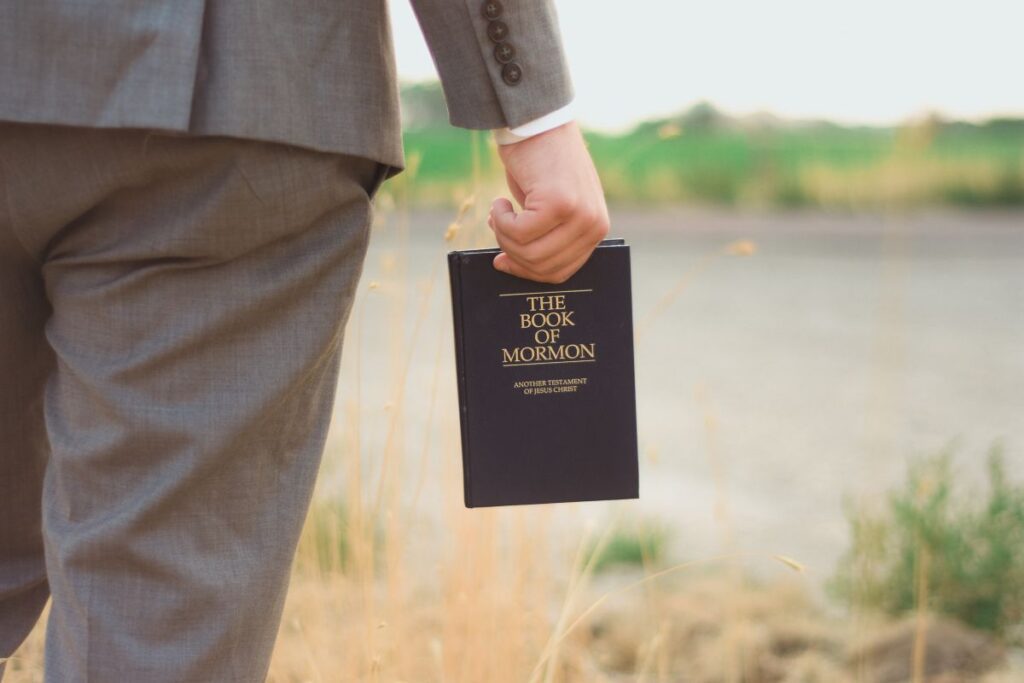
Survivors of sexual abuse connected to the Church of Jesus Christ of Latter-day Saints, often referred to as the LDS Church or Mormon Church, are increasingly turning to the civil justice system to seek accountability and compensation. These cases allege that abuse was committed by church-affiliated individuals and that church leadership failed to take appropriate steps to protect victims, report abuse, or prevent repeat harm.
Interest in a Mormon Church sex abuse settlement, LDS Church settlement, LDS lawsuit update, or Mormon lawsuit payout reflects a broader reckoning with how institutions respond to allegations of sexual abuse. For many survivors, this is not simply about money. It is about recognition, validation, and accountability after years of silence or dismissal.
Sex abuse lawsuits against the Church of Latter-day Saints seek accountability, transparency and recompense for the harm victims suffered. These lawsuits don’t just address individual acts of abuse, but also the broader institution that enabled these practices to go unchecked for decades.
Our Mormon Sexual Abuse Lawsuit attorneys offer free, confidential consultations. Schedule yours at 800-359-5690.
The LDS Church is a global religious organization headquartered in Salt Lake City, Utah, with millions of members worldwide. Members are often referred to as Latter-day Saints, and the term “Mormon” has historically been used to describe both members and the church itself. The church operates through a hierarchical leadership structure that includes bishops, stake presidents, missionaries, youth leaders and other appointed authorities.
This leadership structure is highly relevant to sexual abuse lawsuits. Local leaders often hold significant authority within congregations, including the power to counsel members privately, oversee youth activities and make decisions about discipline and reporting. Survivors have alleged that this authority, combined with a culture of obedience and trust, created environments where abuse could occur without detection or accountability.
In many institutional sexual abuse lawsuits, the focus is not only on the individual abuser but also on whether the church, as an institution, failed in its duty to protect children and vulnerable members. Claims often examine whether church leaders followed internal policies instead of reporting abuse to law enforcement, whether allegations were handled in a confidential manner rather than transparently and whether known risks were disregarded.
Sexual abuse allegations involving the LDS Church span decades and multiple jurisdictions. Survivors have reported abuse by bishops, missionaries, youth leaders and other trusted church-affiliated individuals. In many cases, abuse allegedly occurred during the following instances:
Survivors describe being discouraged from reporting abuse to authorities and instead being directed to handle the matter internally. Some allege that abuse was framed as a moral failing or “sin” rather than a crime, placing additional shame and guilt on victims. Others report that church leaders were aware of prior complaints but failed to remove abusers from positions of authority.
Over time, patterns have emerged suggesting systemic issues in how abuse allegations were handled, including failures to report, lack of oversight and prioritization of institutional reputation.
Across the U.S., several states have enacted reforms to child sexual abuse laws, including extended statutes of limitations and temporary “lookback” or revival windows that allow survivors to file claims that were previously time-barred.
As a result, many victims who experienced abuse decades ago are now eligible to pursue civil claims. This legal shift has contributed to a wave of new lawsuits involving religious institutions, including the LDS Church. Increased public awareness, media reporting and survivor advocacy have also played a role in encouraging individuals to come forward.
A Mormon Church sex abuse settlement is a financial resolution of a civil lawsuit or claim brought by a survivor. Settlements may occur before trial, during litigation, or after certain motions or discovery phases. In many cases, settlements are confidential and do not involve an admission of wrongdoing.
An LDS Church settlement may consider a wide range of damages, including the following:
Settlement discussions also often account for the survivor’s age at the time of abuse, the duration and severity of the harm and whether there is evidence of institutional negligence.
There is no standard settlement amount, and no law firm can guarantee a specific payout in a Mormon lawsuit. Each case is evaluated individually based on the facts, available evidence and applicable state law.
Ridesharing services like Uber and Lyft have become a staple part of our vacations, a night on the town and, for some, getting to and from work. These services have completely changed how transportation works in cities. Ridesharing services allow users to hail a ride through an app, an added convenience for passengers in need of transportation. However, these services also present dangers for both riders and drivers. Passengers risk everything from car crashes and assaults to identity theft and rape.
Settlement posture.
Reports indicate ongoing settlement talks in Uber cases while lawyers prep more state-court trials; federal MDL continues under Judge Breyer.
MDL timing.
Guides updated this week reiterate first federal bellwether trials set to begin in December 2025 (schedule subject to court orders).
Criminal/civil cross-currents.
News highlighted recent criminal outcomes (e.g., a Texas conviction of an Uber driver) and a Texas DA dismissing charges in another case that still has a civil suit pending—illustrating the separate criminal vs. civil tracks survivors may face.
First trial verdict.
In a California state-court bellwether-type trial, the jury found Uber negligent but not liable (negligence not a substantial factor). This was the first U.S. verdict in this line of cases.
Order recap + schedule.
Update pieces summarized the July 8 trimming and noted federal bellwether trials approaching (December target discussed).
Lyft landscape.
Practitioner updates emphasized ongoing Lyft exposure and active plaintiff recruiting; litigation remains fragmented (no unified federal MDL like Uber).
Case volume update.
As of Sept. 2, Uber faced 2,583 federal lawsuits in the rideshare sexual-abuse litigation.
New filings continue.
Example: a Texas case filed Sept. 17 (Williamson County) alleged a March 2025 assault.
State-court pipeline.
Media tracked state-court suits parallel to the federal MDL (e.g., California filings/coverage).
Pressure & growth.
Advocacy reporting highlighted the scale of alleged assaults; meanwhile, ~70 new plaintiffs joined in August, bringing the federal count to 2,583 by Sept. 2
Partial dismissals on theories.
Judge Breyer issued a July 8 order trimming certain fraud and product-liability claims in 20 bellwethers while allowing core negligence theories to proceed.
MDL housekeeping.
At a July 28 CMC, the court extended deadlines on bellwether order/venue issues and set the next conference for late August.
Receipt fraud fight.
Uber told the court some plaintiffs submitted fake/altered ride receipts and sought clarifications/dismissals; the filing covered 100+ claimants.
Remand Push.
Uber asked the court to send bellwether cases back to their state courts based on Terms of Use/forum selection—plaintiffs opposed.
Bellwether slate picked.
The federal judge overseeing the Uber MDL selected six bellwether cases spanning allegations from unwanted touching to rape. Uber later argued about forum issues (see June).
LDS sexual abuse claims continue to move through courts in multiple states. Litigation often involves motions related to statutes of limitations, discovery disputes over internal church records, and questions of institutional responsibility. Some cases are resolved through confidential settlements, while others remain active.
Courts are increasingly being asked to examine how religious institutions balance confidentiality with mandatory reporting obligations. These legal questions are evolving, and outcomes depend heavily on state law and the specific facts of each case. Survivors considering legal action should be aware that developments in one state may not apply universally.
While there is no single nationwide settlement or global resolution, ongoing LDS lawsuit updates suggest continued legal activity and scrutiny. Survivors and advocates continue to monitor how courts handle these claims and what precedents may emerge.
Eligibility to file an LDS sexual abuse lawsuit depends on several factors. Survivors may qualify if the abuse involved one of the following:
A critical factor is whether the claim falls within the applicable statute of limitations or a revival window in the survivor’s state. Because these laws vary significantly, legal review is essential. Survivors should not assume they are ineligible solely based on how long the abuse or assault occurred.
Every survivor’s experience is unique, and a lawsuit is always a personal choice. The Carlson Law Firm offers confidential consultations, allowing survivors to understand their options without pressure or obligation. Schedule your free consultation at 800-359-5690.

These cases may involve sexual abuse of minors or other vulnerable by bishops, missionaries, youth leaders, teachers, or other church-affiliated figures. Abuse is often alleged to have occurred during church activities, counseling sessions, youth programs, or missionary work.
Possibly. Many states have expanded or temporarily reopened the statute of limitations for child sexual abuse claims. Whether an older case qualifies depends on state law and the specific timeline involved.
The LDS Church help line is described in lawsuits as an internal reporting system for abuse allegations. Survivors allege that the help line routed reports to legal counsel rather than law enforcement, delaying or preventing mandatory reporting. The existence and use of this system is a key issue in many cases.
Not likely. Many civil cases resolve through confidential settlements. If your case does go to court, your legal team will prepare you and support you through every step, with your emotional well-being at the forefront.
Consultations with The Carlson Law Firm are free, and you’ll pay nothing unless we successfully resolve your case.
No. While reporting to law enforcement can support a case, it is not required in order to explore civil legal options. Many survivors choose not to report for personal, emotional, or safety reasons, and that choice will not disqualify you from speaking with an attorney.
You may still have time to take legal action. The deadline to file (statute of limitations) varies by state and by the survivor’s age at the time of the assault. It’s best to speak with a lawyer as soon as possible to understand your timeline.
Yes. A trauma-informed attorney will listen at your pace. You do not need to recount the full experience or describe explicit details in order to learn about your options.
Sexual abuse cases involving religious institutions are complex and emotionally difficult. A qualified attorney can help determine whether you may be eligible to pursue an LDS Church settlement, how recent LDS lawsuit updates affect your claim, and what legal options may be available.
Consultations are typically confidential and survivor-focused, allowing individuals to explore their options without pressure.
You do not have to relive the event to seek legal guidance. We meet survivors where they are emotionally and provide support at a pace that feels safe.
If you experienced sexual assault or attempted sexual assault involving unwanted physical contact from a representative of the LDS Church, you deserve support, justice, and accountability. Speaking with a trauma-informed attorney can help you understand your options and whether a lawsuit is right for you.
Schedule your free consultation today. We care. We can help.
With over a dozen locations throughout Texas, there’s a Carlson Law Firm near you. We have law offices nationwide.