On a summer morning in New Jersey, the question was not only what lived in the water, but what had been left there. In towns built around factories, rivers, wells, and work sites, the past did not stay buried. It moved through groundwater. It settled into soil. It followed families from taps to kitchen tables, from municipal budgets to courtrooms, from industrial promise to public cost.
by Eddie Ruiz
A federal judge has approved two major environmental settlements that will require 3M and several DuPont related companies to pay New Jersey up to $1.325 billion over 25 years, while DuPont related companies also remain responsible for remediation commitments valued at about $1.2 billion. The combined value approaches $2.5 billion, making the agreements among the most significant environmental resolutions in the state’s history.
Chief U.S. District Judge Renée Marie Bumb approved the judicial consent orders after nearly six years of litigation brought by the New Jersey Department of Environmental Protection, its commissioner, and the administrator of the New Jersey Spill Compensation Fund.
The lawsuits accused the companies of contaminating the state’s land and water with thousands of chemicals and hazardous substances, with the litigation focused heavily on per and polyfluoroalkyl substances, better known as PFAS.
PFAS are synthetic chemicals that can move through the environment, resist natural breakdown, and become difficult and costly to remove. The court found that PFOA, one of the most studied PFAS chemicals, is toxic at very low concentrations and presents a serious threat to public health through drinking water. For residents, that legal language means a more practical worry: whether the water flowing into a home carries costs that no household can see, smell or easily avoid.
The Industrial Sites at the Center of the Litigation
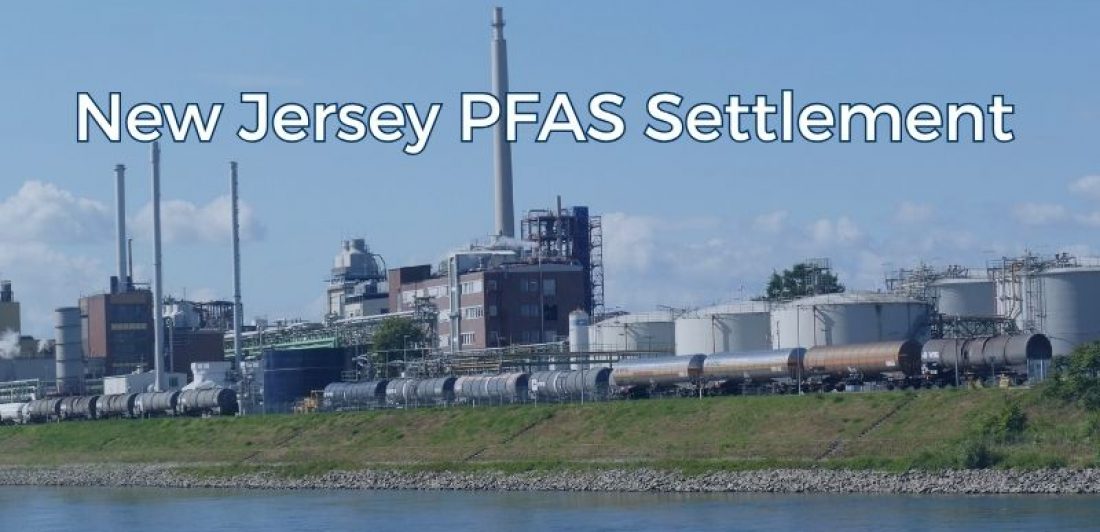
The cases centered on four industrial sites: Chambers Works in Pennsville and Carneys Point, Parlin in Middlesex County, Repauno in Gloucester County and Pompton Lakes in Passaic County. Each site carried its own industrial history.
Chambers Works operated for more than 120 years. Parlin was tied to gun cotton and later Teflon related production. Repauno manufactured and stored industrial chemicals and explosives. Pompton Lakes operated for decades as an explosives manufacturing facility and waste disposal site.
Why the Court Approved the Settlement
The court’s opinion described the litigation as hard fought and extensive. The parties exchanged more than one million documents, took more than 100 fact and expert depositions, and argued numerous discovery disputes. When settlement talks stalled with the DuPont defendants, the court placed the Chambers Works case on an accelerated path.
By mid June 2025, the state and DuPont related companies had completed 12 trial days, heard testimony from 28 live witnesses, and introduced more than 150 trial exhibits. That kind of litigation matters because environmental settlements are often judged not only by the amount of money involved, but by the process that produced them.
Judge Bumb found the agreements procedurally fair, substantively fair, reasonable, consistent with the law and in the public interest. She emphasized that the settlements followed years of adversarial litigation, negotiations supervised by an experienced neutral, public notice and comment and two fairness hearings.
How the Settlement Money Will Be Used
Under the settlements, 3M will pay New Jersey up to $400 million to $450 million, including money for natural resource damages, PFAS abatement and litigation-related costs. The DuPont defendants will pay $875 million over 25 years, including:
- $225 million for natural resource damages
- $525 million for abatement damages
- $125 million for costs, fees and punitive damages
The DuPont agreement also requires remediation funding sources, a reserve fund of $475 million and additional obligations intended to ensure that cleanup continues even if a responsible party fails to perform.
For ordinary residents, the distinction between natural resource damages and abatement damages may sound technical, but the difference matters. Natural resource damages are meant to address injury to the state’s natural resources, including land, water, wildlife, drinking water supplies and air.
Abatement damages are directed toward protecting public health and the environment through projects such as water treatment, infrastructure improvements and other work tied to PFAS contamination.
The court also examined how the settlement funds would be distributed and used. New Jersey’s constitution requires natural resource damage recoveries to be credited to a special account and used to repair, restore, replace, or permanently protect damaged natural resources, with first priority in the area where the damage occurred. The court concluded that the settlements honored that requirement.
PFAS Cleanup Funding and Water Infrastructure Projects
The state also described plans to place PFAS abatement money into a separate, nonlapsing PFAS Abatement Fund. That fund is expected to support water quality projects through the New Jersey Water Bank, including no interest loans, low interest loans and principal forgiveness.
Publicly owned treatment works are expected to receive at least $150 million in assistance for PFAS related infrastructure upgrades. Another $90 million is expected to flow into a qualified settlement fund created through a stipulation with participating counties.
The funding is intended to help counties investigate and remediate PFAS contamination. Those sites matter because firefighting foam has long been one pathway by which PFAS entered soil and water.
Municipal Objections Did Not Stop the Settlement
Carneys Point Township and Sayreville remained opposed to the settlements, raising objections about the state’s authority, municipal claims, constitutional appropriation issues and how settlement funds would be administered.
Judge Bumb rejected those objections. She found that the state had authority to settle claims it brought in its sovereign, quasi sovereign, parens patriae, public trustee and regulatory capacities.
At the same time, she made clear that the order does not decide whether every possible municipal claim is barred. Those questions, if they arise, are left for future courts in actual disputes.
Attorney’s Fees and the Cost of Complex Environmental Litigation
The court also approved about $195.1 million in attorneys’ fees for the state’s special counsel. The fee request was tied to the scale, complexity and duration of the litigation, which involved novel environmental questions, extensive expert work, compressed schedules and well-funded defendants.
Objectors did not challenge the amount of the fee, and the court found it reasonable under New Jersey’s contingency fee rules.
What the Settlement Means for New Jersey Communities
The larger story is not only about corporate payments or legal doctrine. It is about who carries the cost when industrial activity leaves damage behind. The court repeatedly returned to the idea that settlements require compromise.
New Jersey did not receive everything it might have sought at trial. The companies did not admit liability and municipal objections did not disappear, but the court concluded that the agreements delivered substantial, enforceable relief while avoiding years of uncertain litigation.
That is where the story returns to the morning water. A settlement on paper does not clean a well by itself. A court order does not reassure a parent standing at a sink. What matters now is whether the money follows the environmental contamination, whether projects reach the communities that need them, and whether the promise made in a federal courtroom becomes visible in the places where families live, work and turn on the tap.