by Eddie Ruiz
A school administrator in New Mexico described a scene that has become painfully familiar to many parents and educators. Students were no longer just distracted in class; they were pulled back again and again to their phones. Arguments that once might have ended when the final bell rang followed children home through social media, stretching late into the night and returning to school the next morning heavier than before.
What began online often resurfaced in hallways, classrooms, counseling offices, and disciplinary meetings, leaving educators to manage problems that were growing beyond the school day. According to testimony cited by the court, addressing those conflicts increasingly consumed time, resources, and emotional energy, while also affecting students’ well-being, sense of safety, and ability to learn.
On August 6, 2026, First Judicial District Judge Bryan Biedscheid entered judgment in favor of the State of New Mexico in its lawsuit against Meta Platforms, Inc., following months of testimony, documentary evidence, and two separate trial phases. The decision represents one of the most extensive judicial examinations to date of the relationship between social media platforms and adolescent well-being.
The court concluded that Meta's platforms substantially contributed to a public nuisance affecting youth throughout New Mexico. To understand why the court reached that conclusion, it is necessary to examine the evidence presented during trial.
The Court Found Multiple Factors Affect Youth Mental Health
The case did not begin with an assertion that social media alone caused the challenges facing young people. In fact, the court repeatedly acknowledged that adolescent mental health is influenced by many factors, including:
- Family circumstances
- Poverty
- Trauma
- Community conditions
- Social pressures
- Broader societal issues
After examining the evidence presented during trial, the court found that New Mexico is experiencing a youth mental health crisis and that Meta's platforms are a significant contributing factor to that crisis.
The findings point to troubling trends. Evidence showed that persistent feelings of sadness or hopelessness among New Mexico high school students were significantly higher in 2023 than a decade earlier. The court also cited evidence demonstrating that major depressive episodes among young people in New Mexico more than doubled over roughly the same period.
Suicide remains one of the leading causes of death among adolescents in the state, while reports of anxiety, self-harm and eating disorders have continued to rise. According to the court, these challenges have created profound consequences for families and communities while placing growing pressure on already strained public resources.
The State argued that these worsening trends were not occurring in isolation. Central to its case was the claim that certain design features on Meta's platforms amplified those harms.
Evidence Presented During Trial
Medical professionals testified that New Mexico's behavioral health system is struggling to keep pace with the growing demand for services. Children experiencing mental health crises are often forced to wait for treatment, while healthcare providers face severe resource shortages.
The court found that the increase in youth mental health needs has burdened hospitals, treatment programs, schools, and public agencies throughout the state.
How Meta's Platform Design Influenced the Court's Decision
Central to the case was the design of Meta's platforms. The court reviewed evidence concerning features such as:
- Push notifications
- Autoplay video
- Infinite scrolling
- Visible like counts
- Recommendation algorithms
Internal company documents discussed how these tools encouraged engagement and increased the amount of time users spent on Instagram. According to the court, Meta understood that teenagers were especially responsive to these engagement mechanisms because of their developmental stage and ongoing brain development.
The court found that Meta knowingly implemented engagement-focused features and that those features contributed to problematic use among adolescents. Evidence presented at trial suggested that some teenagers used Meta's platforms in ways that interfered with sleep, education, emotional regulation and overall well-being.
The court ultimately concluded that these design choices contributed to anxiety, depression, sleep deprivation and other adverse outcomes affecting youth.
The Court Also Examined Safety Risks for Minors
Beyond concerns about mental health and problematic use, the State also argued that Meta's platforms exposed minors to significant safety risks. Testimony addressed online grooming, sexual exploitation, sextortion and the ways in which platform features could facilitate contact between adults and minors.
The court cited internal materials discussing situations in which adults who interacted with minors were recommended similar accounts. Witnesses described the lasting psychological effects of exploitation and the burden placed on law enforcement agencies responsible for investigating these crimes.
Schools Described the Real-World Impact of Social Media
Educators described how social media related incidents disrupted classrooms and consumed valuable school resources. School officials testified that bullying, threats and conflicts often intensified through Instagram and continued long after the initial incident.
According to the court, these disruptions affected not only individual students but entire educational environments. Those concerns formed only part of the State's broader case against Meta. The litigation also included claims under New Mexico's Unfair Practices Act, which were presented to a jury before the public nuisance phase began.
Jury Awarded $375 Million Under the Unfair Practices Act
Before the public nuisance phase of the litigation, a jury heard evidence regarding the State's claims under New Mexico's Unfair Practices Act. The jury found that Meta committed 75,000 violations and imposed the maximum statutory penalty of $5,000 per violation, resulting in a civil penalty award of $375 million.
The jury concluded that many New Mexico minors used Meta's platforms without being adequately informed of risks associated with those products. The court later referenced that verdict as additional support for its finding that Meta's conduct was unreasonable.
Why the Court Ordered a $567 Million Abatement Fund
In addressing the public nuisance claim, Judge Biedscheid used an analogy that appeared repeatedly throughout the ruling. The court compared Meta's platforms to a factory and the resulting psychological harms and sexual exploitation to pollution that spreads beyond its source.
According to the court, the consequences of those harms do not remain confined to the platforms themselves. Instead, they affect schools, hospitals, law enforcement agencies, families and communities throughout the state. Importantly, the court did not find that Meta alone was responsible for every harm affecting New Mexico youth.
The ruling recognized that other social media companies also compete for young people's attention and contribute to similar concerns. The court nevertheless concluded that Meta remained a substantial contributing factor and could not avoid responsibility simply because other companies may have contributed to the same public harms.
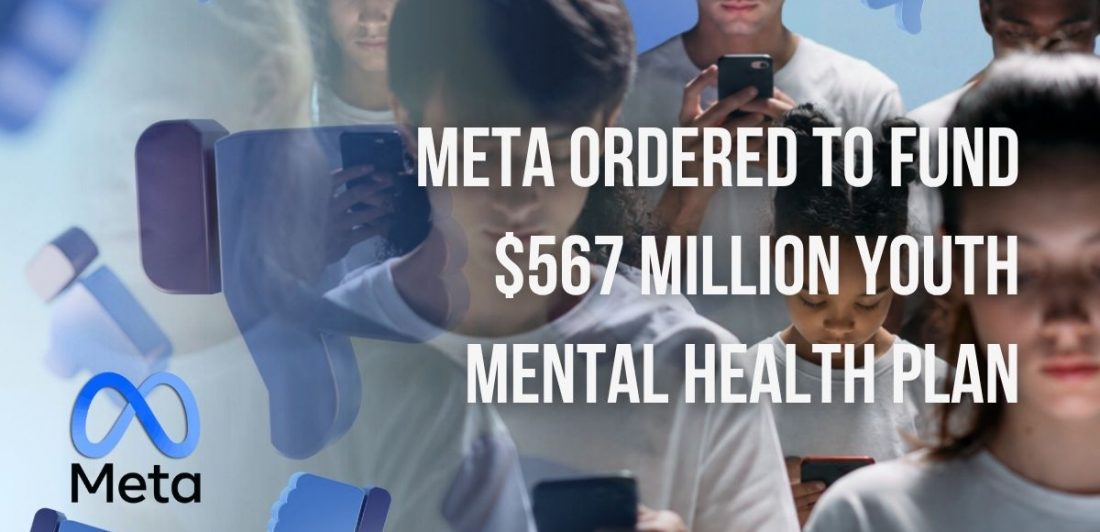
As part of the judgment, the court ordered extensive abatement measures intended to address existing harms and reduce future risks. Those measures include the creation of a $567 million abatement fund dedicated to:
- Prevention
- Assessment
- Treatment
- Education
- Related programs
The court also ordered age-verification measures, expanded protections for teen accounts, additional safeguards against child exploitation, educational programs, transparency initiatives and reporting requirements.
Meta Plans to Appeal the Decision
The court stopped short of ordering broad changes to Meta's recommendation algorithms, noting concerns involving constitutional protections and federal law. Even so, the decision reflects a clear conclusion reached after months of litigation: Meta's platforms have played a substantial role in a youth mental health crisis that has affected families, schools, healthcare systems and public institutions across New Mexico.
According to multiple media reports, Meta has said it will appeal the ruling and maintains that it works to protect teens online. The findings underscore that meaningful intervention is necessary because the consequences extend well beyond the digital world and into the daily lives of thousands of New Mexico children and their communities.
In many ways, the case returns to the same scene where this story began: a student looking down at a phone, carrying an online conflict back into the classroom the next day. The court's ruling cannot undo the harms described during the trial, nor can it solve New Mexico's youth mental health crisis on its own. But it reflects a hope that future students will spend less time bearing those burdens and more time doing what children should be free to do: learn, grow and simply be kids.
Source: Findings of Fact, Conclusions of Law, and Judgment, Order, and Decree of the Court, State of New Mexico ex rel. Raúl Torrez v. Meta Platforms, Inc., No. D-101-CV-2023-02838, First Judicial District Court, Santa Fe County, filed August 6, 2026.
About The Carlson Law Firm
The Carlson Law Firm is a nationally recognized personal injury law firm dedicated to delivering compassionate, client-focused legal representation. Known for achieving record-breaking results, we’ve recovered billions by handling cases involving auto and trucking accidents, workplace injuries, defective products, dangerous drugs, nursing home neglect, birth injuries, wrongful death, family law, criminal defense and more. Our team is committed to securing justice and meaningful recovery for individuals and families impacted by negligence and injustice.
Media Contact:
Shanilis Ortiz
254-284-5256
shanilis@carlsonattorneys.com