
Cranes are essential to construction, manufacturing, shipping, oil and gas operations and other industries that require workers to lift and move heavy loads. However, defective components, improper maintenance and equipment failures can contribute to serious crane accidents.
Understanding how cranes work and which components can fail can help workers recognize potential hazards. Below, we discuss common crane types, safety requirements, equipment defects and what to do after a crane accident.
What are commercial cranes?
Cranes are heavy equipment designed to lift and move heavy objects. Cranes come in different shapes and sizes that can be used in various environments and have different applications. Some places where cranes are commonly used include residential and commercial construction, power generation, telecommunications, shipping and storage, and the oil and gas industry.
Main Components of Cranes
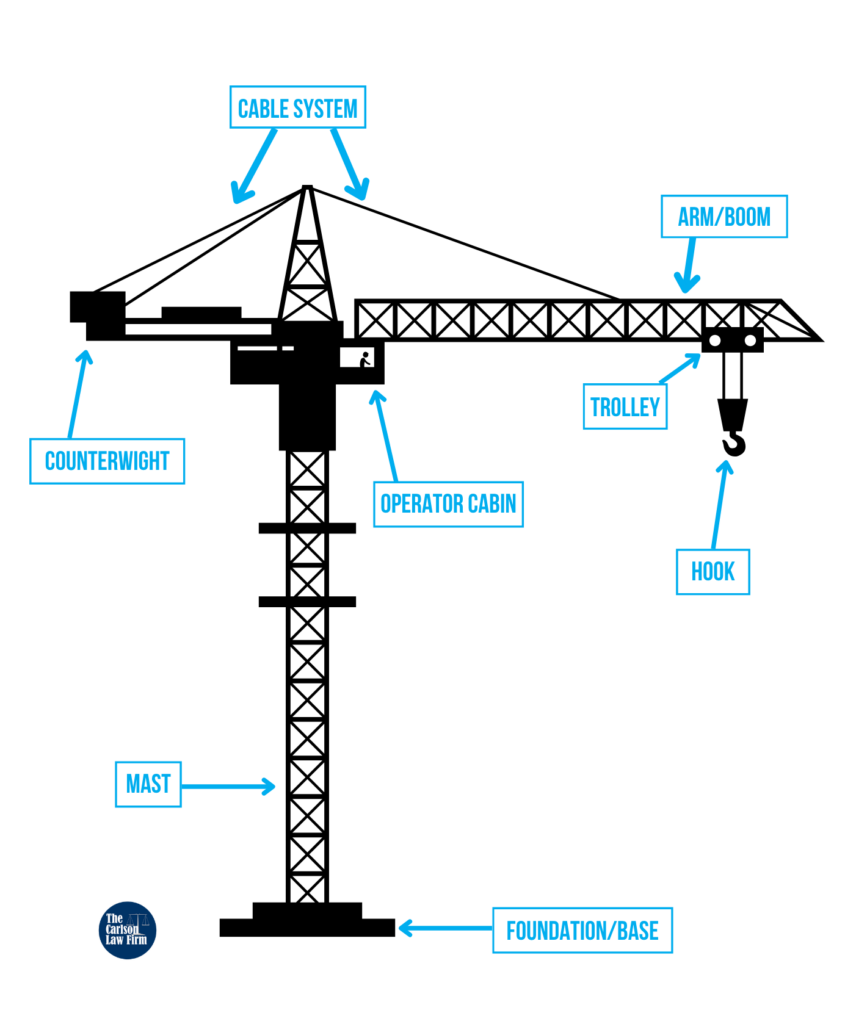
The main components of cranes can vary slightly depending on the type. The main components of the most common types of cranes are the boom, controls, hook, jib, outriggers and wire system/hoist.
- Booms: The crane's primary arm, which may be fixed or telescopic depending on the crane.
- Controls: Allow the operator to direct the crane and move its load. Depending on the crane, controls may be located in a cab or operated remotely.
- Hooks: The hook component is located at the end of the hoist. It is used to secure the load. Hooks can be enhanced with a variety of approved attachments depending on the task at hand. Some common attachments are clamps, grab and lifting magnets.
- Jib: In tower cranes, the jib refers to the horizontal arm that carries the load. In other types of cranes, the term jib is used to describe a shorter extension of the boom that provides more height or reach.
- Outriggers: Outriggers are extensions in mobile cranes set on the ground to stabilize the crane.
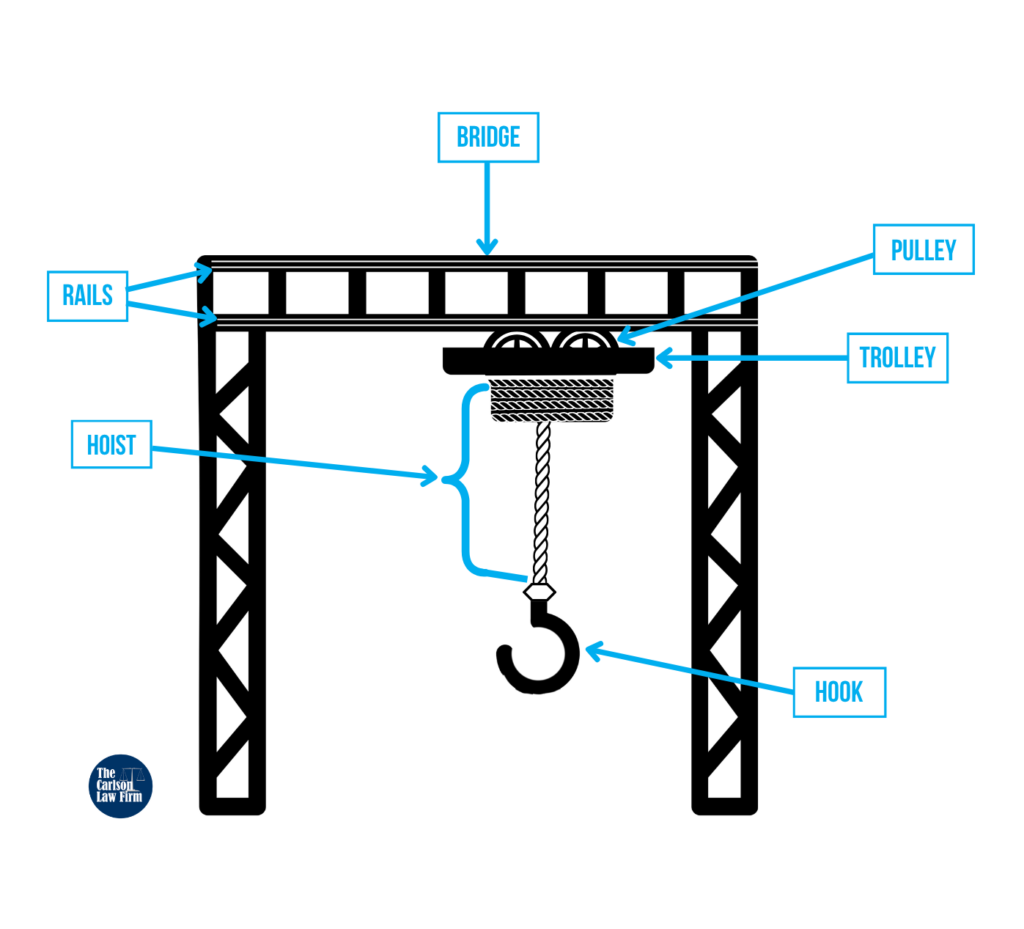
- Wire System (Hoist): The hoist or wires use a pulley system to raise and lower the load.

Types of cranes. What are the most common uses of cranes in what industries?
Mobile Cranes
Mobile cranes are simple yet versatile machines that consist of a mobile platform with a mounted boom. This category of cranes includes several types of cranes such as vehicle-mounted cranes, floating cranes and crawler cranes. For example, mobile cranes are routinely used at construction sites, energy facilities and oil and gas operations.
Mobile cranes are the most commonly used type of crane because they are relatively easy to transport to different locations, compared to static or tower cranes. The U.S. Occupational Safety and Health Administration (OSHA) has established specific requirements and guidelines designed to address hazards associated with crane operations.
Tower Cranes
Tower cranes are primarily used on large construction projects. They consist of a tall tower fixed to the ground or a stable platform and a horizontal jib used to lift and move heavy materials at significant heights.
Overhead Cranes (Bridge Cranes)
Overhead cranes, also known as bridge cranes, move loads horizontally along elevated rails. They are commonly used in manufacturing facilities, warehouses, ports and other environments where heavy materials must be moved across a defined area.
Floating Cranes (Platform Cranes)
Floating cranes, also known as crane ships or crane barges, are used in offshore construction, drilling, shipping and other operations that require extremely heavy loads. Their ability to operate from the water makes them useful for marine construction and offshore projects.
Labor Statistics
Thousands of crane and tower operators work across the United States in construction, manufacturing, transportation and other industries that rely on heavy equipment. According to the U.S. Bureau of Labor Statistics (BLS), approximately 42,890 crane and tower operators were employed nationwide as of May 2025. These workers earned a mean hourly wage of $34.68 and a mean annual wage of $72,130.
Employment levels and wages vary by location and industry. BLS also projects employment for crane and tower operators to grow in the coming decade as these workers continue to support construction, shipping and other industries that require heavy materials to be moved.
Crane Safety
Proper training, equipment inspections and compliance with applicable safety requirements can help reduce the risk of crane accidents. Because operating procedures can vary by crane type and model, workers should understand the equipment, operating mechanisms and safety protocols before use. Regular inspections can also help identify worn, damaged or malfunctioning components before they contribute to an accident.
OSHA Requirements
The Occupational Safety and Health Administration (OSHA) establishes training, certification and evaluation requirements for operators of cranes covered by federal construction standards. Employers must generally ensure that operators are trained, certified or licensed and evaluated before operating covered equipment.
OSHA also requires employers to evaluate operators to confirm they have the skills and knowledge necessary to safely operate the specific equipment assigned to them. Certification from an accredited crane operator testing organization is generally valid for five years.
Injuries and Deaths
A Center for Construction Research and Training (CPWR) report examined 632 crane-related construction worker deaths from 1992 through 2006. The study found that 78% of the deaths involved mobile or truck cranes, 12% involved overhead or gantry cranes, 5% involved tower cranes and 3% involved floating or barge cranes.
The study identified several recurring causes of fatal crane accidents, including:
- electrocution from overhead power lines
- being struck by cranes, crane loads or crane parts
- crane collapses
- falls
- impingement between crane parts
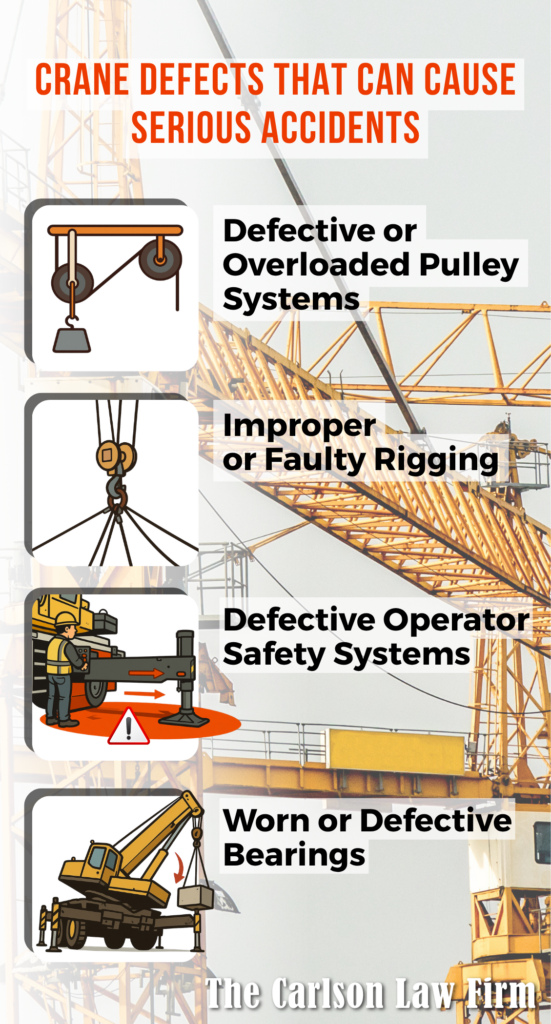
Crane Defects That Can Cause Serious Accidents
Defective or Overloaded Pulley Systems
Wires are an essential component of crane systems, so damaged or defective wire rope can create serious safety risks. OSHA requires recurring wire rope inspections to identify conditions that could affect safe operation, including kinking, crushing, unstranding, corrosion, broken wires and damaged end connections.
Wire rope runs through wheel-like components called sheaves, which guide the rope as loads are raised and lowered. Worn, damaged or improperly sized sheaves can contribute to excessive wire rope wear or interfere with safe operation.
Improper or Faulty Rigging
Rigging equipment, including slings, chains, hooks and other hardware, helps secure a load to the crane. Damaged or improperly configured rigging can allow a load to shift, become unstable or fall during lifting operations. Potential problems may include worn or damaged slings, defective hooks or hardware, improper load securement, unbalanced loads or rigging used beyond its rated capacity.
Regular inspection and proper selection of rigging equipment can help identify damaged components and ensure the equipment is appropriate for the load being lifted.
Defective Operator Safety Systems
Cranes may rely on safety devices, operational aids, warning systems and controls to help operators identify hazards and operate equipment within safe limits. If these systems are defective, damaged or improperly maintained, they may fail to warn an operator about a dangerous condition or prevent unsafe equipment operation.
OSHA crane inspection requirements include checking applicable safety devices and operational aids to verify that they are functioning properly.
Worn or Defective Bearings
Worn, damaged or improperly specified bearings can affect a crane's ability to rotate and safely support the forces placed on its structure. Depending on the circumstances, bearing failure can contribute to instability, uncontrolled movement or other equipment failures.
What Should You Do After A Crane Accident?
Suffering injuries from a crane accident? Here are some critical next steps to consider:
- Get medical attention. Call 911 if you or someone else has suffered a serious or potentially life-threatening injury.
- Report the accident. If the accident happened at work, notify your employer and follow applicable workplace reporting procedures.
- Preserve evidence. When possible, keep photos, videos, witness information, incident reports and other records related to the accident.
- Follow your treatment plan. Continue receiving appropriate medical care and keep records of your treatment, expenses and how your injuries affect you.
- Speak with an attorney. A crane accident attorney can investigate whether defective equipment, unsafe working conditions or another party's negligence contributed to the accident.
Crane Accident Attorneys
Crane accidents can result in catastrophic injuries, particularly when defective equipment or unsafe working conditions are involved. Determining what caused an accident may require reviewing the crane itself, maintenance and inspection records, manufacturer information and conditions at the worksite.
The Carlson Law Firm represents people injured in workplace accidents and incidents involving defective products. If you or a loved one suffered injuries in a crane accident, speaking with a workplace injury attorney can help you understand what may have caused the accident, who may be responsible and what legal options may be available.