
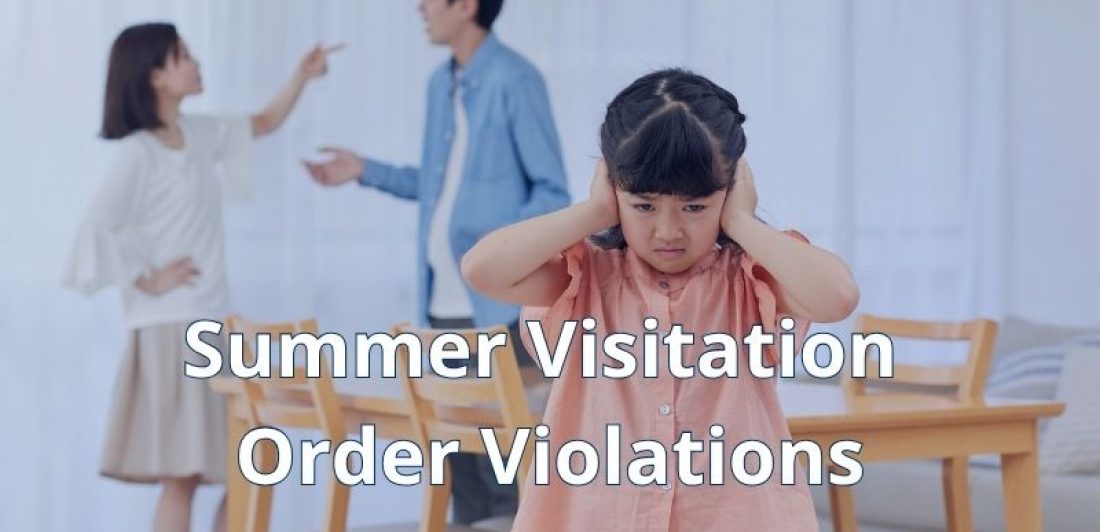
Summer visitation gives children an opportunity to spend meaningful, uninterrupted time with both parents. For many families, it is one of the longest periods a parent and child spend together each year. Unfortunately, there are situations when one parents refuses to a court-ordered summer possession schedule.
If the other parents refuses to release your child, fails to return them on time or interferes with your schedules possession, violating a court order can have legal consequences. Understanding your rights can help protect your relationship with your child while preserving your legal options.
At The Carlson Law Firm, our family law attorneys help parents throughout Texas understand and enforce their court-ordered possession schedules while keeping the child's best interests at the center of every case.
Understanding Summer Visitation in Texas
Texas refers to visitation as possession and access. Most parents follow either a Standard Possession Order (SPO) or a customized possession schedule approved by the court. Depending on the custody arrangement, the noncustodial parent may receive an extended period of possession during the summer months.
Parents typically have deadlines for designating their preferred summer dates. If no designation is made, the default schedule established by the court generally applies. Every order is unique, so it is important to carefully review your decree instead of relying on assumptions or informal agreements.

Common Summer Visitation Violations
There are many ways that summer violation disputes can take place. While every family situation is different, some violations occur more often than others. Common examples include:
- Refusing to release the child at the scheduled exchange
- Returning the child after the court-ordered end date
- Canceling visitation without agreement
- Scheduling vacations during the other parent's possession time
- Failing to provide required notice for summer possession
- Interfering with communication between the child and the other parent
- Repeatedly arriving late for exchanges
- Withholding the child because of disagreements unrelated to visitation
Some violations happen because of misunderstandings, while others are an intentional refusal to follow a court order.
Does Missing One Exchange Automatically Lead to Court?
Not necessarily. Texas courts generally recognize that emergencies happen and there are unavoidable circumstances that can interfere with scheduled possession.
However, repeated violations, intentional interference or a pattern of refusing to follow the order may justify legal action. Judges consider the overall circumstances, including:
- Whether the violation was intentional
- Whether reasonable efforts were made to comply
- How frequently violations occur
- The impact on the child
- Whether the parents tried to resolve the issue before seeking court intervention
A single misunderstanding is often treated differently than a pattern of interference.
What Should You Do If the Other Parent Violates Summer Visitation?
When emotions run high, it can be tempting to respond immediately or refuse future visitation in return. However, staying calm and documenting what occurred often places you in a stronger legal position. Consider taking the following steps:
- Review your court order carefully.
- Arrive at the scheduled exchange location as ordered.
- Keep copies of text messages, emails and other communications.
- Document missed exchanges, dates and times.
- Save photographs or other evidence if relevant.
- Avoid arguing in front of your child.
- Speak with a family law attorney if the violations continue.
Organized documentation can make it easier to demonstrate a pattern of violations if court intervention becomes necessary.
What Should You NOT Do?
It is natural for parents to become frustrated when the other parent ignores a court order. However, reacting emotionally can sometimes create more legal problems. It is important to avoid:
- Refusing future visitation in retaliation
- Speaking negatively about the other parent to your child
- Keeping the child beyond your own scheduled possession
- Ignoring future court orders
- Making threats over text or social media
Instead, continue complying with your own obligations whenever possible. Texas courts generally expect both parents to follow existing orders until they are officially modified.
Can You Deny the Other Parent Their Next Visitation?
In most cases, no. Many parents assume they can “make things even” by withholding future visitation after the other parent violated the order. However, doing so may place you in violation of the same court order you are attempting to enforce.
Instead of taking matters into your own hands, it is usually better to trust the court system and pursue the available legal remedies.
Can Police Enforce a Visitation Order?
A common question parents have is whether law enforcement can force the other parent to comply with a possession order. In many situations, visitation disputes are considered civil matters rather than criminal matters.
While officers may respond to keep the peace during an exchange, they generally cannot force one parent to surrender a child simply because the order has been violated. Instead, enforcement usually occurs through the family court that issued the original order.
How Can the Court Enforce Summer Visitation?
If the other parent repeatedly refuses to comply with the court order, you could be able to file an enforcement action. Depending on the circumstances, the court may:
- Order makeup parenting time
- Hold the violating parent in contempt
- Assess fines
- Order attorney's fees and court costs
- Require future compliance with the possession schedule
- Issue additional orders designed to prevent future violations
Texas law allows courts to enforce visitation orders, but the specific solution depends on the facts of each case. Before a court can enforce a visitation order, the parent requesting enforcement generally needs to identify the provisions of the order that were violated and explain how those violations occurred.
What Evidence Helps an Enforcement Case?
Courts rely on evidence rather than conflicting recollections when evaluating whether a visitation order was violated. Keeping detailed records from the first missed exchange can make it easier to demonstrate a pattern of noncompliance if enforcement becomes necessary.
Successful enforcement actions often depend on detailed documentation. Helpful evidence can include:
- Court orders
- Text messages
- Emails
- Parenting app communications
- Calendar entries
- Photographs
- Witness statements
- GPS records
- Police incident reports (when applicable)
Whenever possible, keep a written timeline of each missed exchange, including the date, time, location and any communication with the other parent. Even if a single violation does not result in court action, a well-documented history may become valuable if problems continue over time.
Can Summer Visitation Violations Affect Future Custody Decisions?
A single violation may not justify changing child custody. However, repeated refusal to follow court orders can become an important factor when the court considers future custody or possession modifications.
Judges generally encourage healthy relationships between children and both parents whenever appropriate. Repeated interference with possession may demonstrate an unwillingness to support those relationships.
When Is a Modification Better Than Enforcement?
Sometimes the issue is not that one parent refuses to follow the order. Family circumstances can change significantly since the original order was entered, with some examples being:
- A parent relocating
- Changes in work schedules
- Older children's extracurricular activities
- Medical needs
- Changes in school schedules
Instead of going back to court repeatedly for enforcement, modifying the existing order may be more practical. If enforcement or a modification becomes necessary, the process is often handled through a Suit Affecting the Parent-Child Relationship (SAPCR), which allows Texas courts to address issues involving child custody, possession and access.
Does Child Support Affect Summer Visitation?
Generally, no. Child support and visitation are separate legal issues. In most cases, one parent cannot refuse visitation just because child support has not been paid.
Likewise, failing to exercise visitation generally does not remove a parent's child support obligation. Parents should continue following both portions of the court order unless the court approves a modification.
Can Parents Agree to Different Summer Dates?
Yes. Many parents successfully cooperate to create summer schedules that function better for their vacations, camps, work schedules and family events.
Whenever possible, agreements should be documented in writing so both parents clearly understand the arrangement. If cooperation becomes impossible, however, the written court order generally controls visitation.
How Can Mediation Help Resolve Summer Visitation Disputes?
Not every disagreement requires litigation. In many cases, family mediation allows parents to discuss scheduling issues with the assistance of a neutral third party.
Professional mediation can help preserve co-parenting relationships while avoiding lengthy court proceedings.
Summer Visitation FAQ
What happens if the other parent refuses to return my child?
Depending on the circumstances, failing to return a child as required by a court order may justify filing an enforcement action. An attorney can review your order and explain any available legal options.
Can I call the police if the other parent keeps my child?
Law enforcement may respond to the situation, but visitation disputes are often handled through family court rather than criminal enforcement.
Can I make up missed summer visitation?
Parents may voluntarily agree to makeup parenting time. If they cannot agree, the court may determine whether additional possession is appropriate.
How many violations are required before filing an enforcement action?
There is no specific number. Even one serious violation could justify court intervention depending on the circumstances. Repeated violations often strengthen an enforcement request.
Can text messages be used as evidence?
Yes. Text messages, emails and communications through parenting apps may all become important evidence during an enforcement proceeding. In some situations, social media posts or messages may also be important.
If the other parent discusses visitation, admits to withholding the child or makes statements that contradict their position, preserving those communications can be helpful. Save screenshots, messages and other records in their original form.
Will violating visitation automatically change custody?
Not automatically. However, repeated violations may become relevant if the court later considers whether modifying child custody would be in the child's best interests.
Speak With a Texas Family Law Attorney
Summer visitation disputes can quickly become emotional for both parents and children. While every situation is unique, understanding your legal rights and responding appropriately can help protect your relationship with your child while preserving future legal options.
If the other parent refuses to comply with your court-ordered summer possession schedule, The Carlson Law Firm can review your situation, explain your rights and help you determine the next steps. Contact our family law attorneys today to schedule a consultation and learn more about your options.