Hosting Thanksgiving is about more than getting the turkey in the oven on time. When family and friends fill your home, normal spaces can suddenly become crowded with extra chairs, serving dishes, coats, bags, children and pets.
A little preparation can help prevent common household hazards from turning Thanksgiving dinner into an unexpected trip to the emergency room. Before guests arrive, here are eight ways to help make Thanksgiving safer in and around your home.
Keep Floors and Walkways Clear and Dry
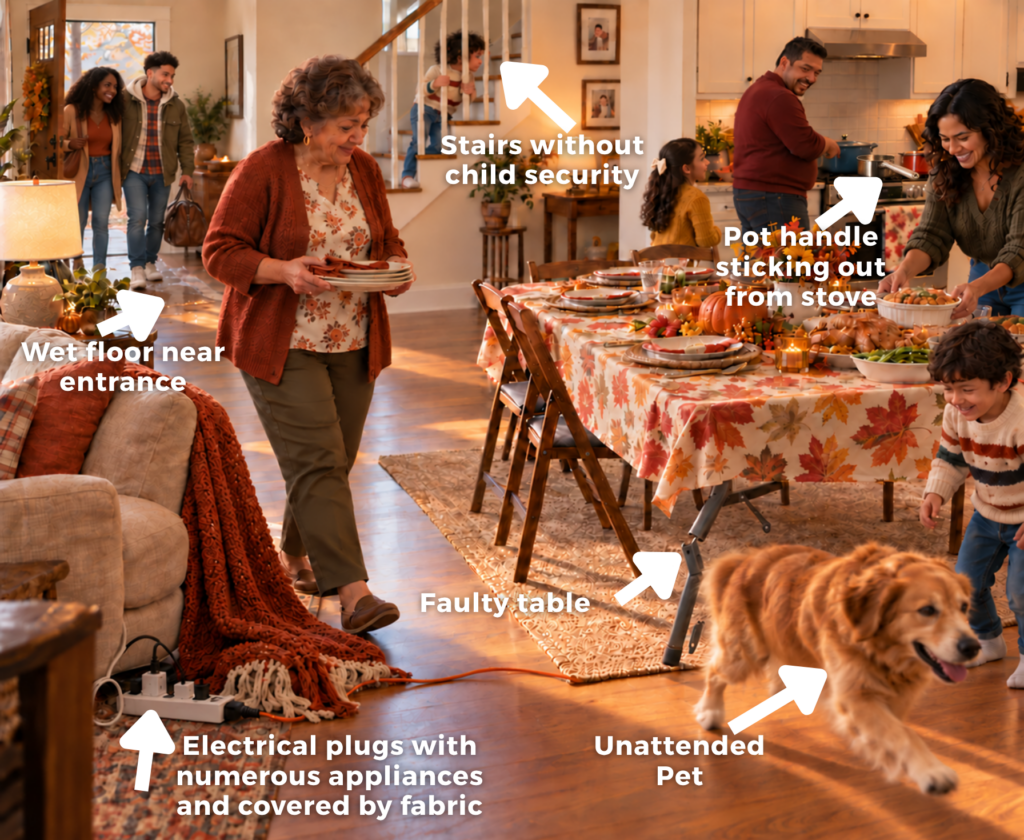
Thanksgiving can create plenty of opportunities for someone to slip or trip. Drinks get spilled and extension cords may run through areas where people walk. As guests arrive, shoes and bags can pile up near the door. As you walk through your home, consider:
- Clear clutter from hallways and other high-traffic areas
- Secure or remove loose rugs
- Clean up spills as soon as possible
- Avoid running electrical cords across walkways when possible
Rain, mud or wet leaves can make porches, steps and entryways slippery. Keeping these areas clear and well-lit can help guests get in and out of your home safely. Falls can be especially dangerous for older guests.
The Centers for Disease Control and Prevention (CDC) recommend keeping floors free of clutter, addressing trip hazards and making sure rooms and hallways have adequate lighting.
Check Your Stairs, Railings and Lighting
Your family may know about loose steps or lights that do not work, but other guests may not. Check indoor and outdoor stairs before Thanksgiving for loose or uneven steps, damaged flooring and unstable handrails.
Replace burned-out bulbs and make sure guests can clearly see hallways, stairways, entrances and other areas they will be using. If furniture or holiday decorations have changed the normal layout of your home, make sure they are not blocking walkways or making stairs difficult to access.
Test Out Extra Tables and Chairs
Thanksgiving gatherings may need you to bring tables and chairs out of storage and back into service. Before anyone uses one, though, you should make sure the chairs are ready for company.
Check folding chairs, stools, card tables and other extra furniture for loose screws, cracks, instability or other obvious damage. Place furniture on a stable, level surface and avoid using items that appear broken or unreliable.
It may seem like a small task, but it can help prevent a guest from taking an unexpected tumble halfway through the main course.
Watch for Electrical Hazards
Extra lights, warming appliances and holiday decorations can put electrical cords and outlets to work during Thanksgiving. Inspect cords before using them and avoid using equipment with frayed wires, damaged plugs or other visible defects.
The U.S. Consumer Product Safety Commission recommends avoiding overloaded electrical outlets and taking precautions when using holiday lights and decorations. Watch for damaged wires, cracked sockets and loose connections. Cables stretched across hallways or between rooms can also become trip hazards.
Keep the Kitchen as Safe as the Rest of the House
The kitchen is often the busiest room in the house on Thanksgiving, and cooking is the leading cause of home fires and home fire injuries, according to the U.S. Fire Administration.
When you are cooking on the stove, make sure to stay nearby and keep flammable items away from cooking areas. Turn pot handles toward the back of the stove where they are less likely to be pulled down or bumped.
Guests may come in and out of the kitchen, so it can also help to keep children away from hot appliances, sharp utensils and areas where food is prepared. If you are using a turkey fryer, follow the manufacturer’s safety instructions and use the equipment in an appropriate location.
Have a Plan for Dogs and Other Pets
A dog that is relaxed around your immediate family may react differently when the house is suddenly filled with unfamiliar people, excited children and new sounds. Dogs may bite when they are scared, nervous, eating, protecting something or want to be left alone.
The CDC recommends supervising young children around dogs, including family pets. If your dog becomes anxious or uncomfortable around visitors, consider giving the dog a quiet, secure space away from the gathering. A separate room or crate can give the dog a break while limiting interactions with guests.
Do not force a nervous dog to socialize. Guests should also understand when a pet needs to be left alone. Taking precautions before everyone arrives can help make the gathering less stressful for your pets.
Think About Children and Older Guests
The layout of your home can present different challenges when you are hosting people of different ages.
- Young children may be curious about stairs, pools, fireplaces, pets, candles and hot food.
- Older guests can benefit from clear walkways, sturdy handrails and good lighting.
You do not need to redesign your house for Thanksgiving, but consider who will be visiting and whether there are obvious hazards you can address beforehand. If young children are attending, make sure an adult is responsible for supervising them.
Don't Forget the Outside of Your Home
The exterior of your house is also your responsibility, so consider the route guests will use. Steps you can take include:
- Clear leaves, hoses, tools and other objects from walkways
- Check outdoor steps and railings for slipping or tripping hazards
- Make sure entrances and paths have enough lighting for guests leaving after dark
If guests will spend time on a patio, deck or in the backyard, inspect those areas, too. Damaged boards, unstable furniture and uneven surfaces could cause an injury. Take precautions around pools and other water features, especially if children are visiting.
A Safer Home Can Make for a Happier Thanksgiving
Hosting Thanksgiving can give you a lot to think about, but basic safety does not have to be complicated. Clearing walkways, checking furniture, securing pets and addressing obvious household hazards can help everyone focus on good food and spending time together.
However, not every injury that happens at someone’s home means the property owner is legally responsible. Premises liability depends on the circumstances, including the condition that caused the injury, who was responsible for the property and what the responsible party knew or should have known about the hazard.
If you were injured because of an unsafe condition on someone else’s property, a premises liability lawyer can investigate what happened and help you understand your rights and possible legal options. Contact The Carlson Law Firm to schedule a free consultation.